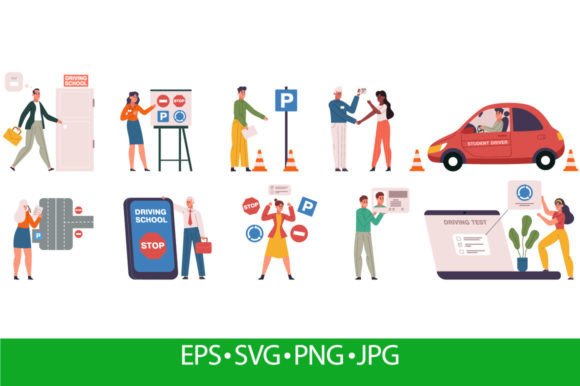
School Education Art Embroidery Review
As a designer who spends more time staring at stitch density charts and fabric swatches than actually sleeping, I approach every new digital asset with a mix of curiosity and skepticism. The market is flooded with generic clip art, so finding a design that translates well from a screen to a hoop is rare. Recently, I pulled School Education Art off the shelf to test its viability for real-world projects. My goal was simple: determine if this illustration holds up under the needle or if it falls apart in the details.
I am evaluating this file not just as a static image, but as a functional component of a handmade product. Whether you are an Etsy seller looking for your next bestseller, a boutique owner branding your store, or a hobbyist making a personalized gift for a teacher, the difference between a "nice picture" and a "sellable product" lies in execution. Here is my practical breakdown of how School Education Art performs when we move it out of the digital realm and into the physical world.
First Impressions and Visual Personality
The moment you open the file, the mood is distinct. It carries a nostalgic yet clean aesthetic that feels appropriate for educational themes without being overly childish or stiff. The layout suggests a structured composition, which is crucial for embroidery because our machines love symmetry and clear boundaries. Unlike chaotic abstract graphics that result in tangled threads, this design appears to have intentional negative space.
For those of us working in Illustrations and Graphics, visual hierarchy matters. This design balances its elements well. It doesn’t scream for attention; instead, it invites a closer look. This subtlety is a huge advantage for apparel decorators. A loud, high-contrast graphic can overwhelm a garment, but School Education Art sits comfortably on a canvas tote bag or a sweatshirt, adding character without dominating the wearer’s outfit. It feels professional enough for a classroom setting but playful enough for a personal gift.
Real-World Application: Where Does It Shine?
To truly judge a machine embroidery design, you have to imagine it on a finished product. Let’s talk about a specific scenario: preparing a batch of custom embroidered tote bags for a local back-to-school fair. This is a high-volume, low-margin game where clarity is king. If the design is too intricate, customers will see a muddy blob. If it’s too simple, it looks cheap.
School Education Art strikes a strong middle ground. When placed centrally on a heavy-duty cotton canvas tote, the design anchors the bag beautifully. The shapes are bold enough to be recognized from a distance, which is essential for Etsy seller listings where photos are viewed on small mobile screens. The clean lines suggest that the final embroidered patch or direct-to-garment print would have sharp edges, provided the digitizing is done correctly.
Beyond totes, this design has significant potential in the custom apparel sector. Imagine this motif stitched onto the front pocket of a denim jacket or centered on the chest of a crewneck sweatshirt. The theme lends itself perfectly to holiday embroidery collections, particularly around September and October. It also works exceptionally well for personalized gifts. Adding a name above or below this graphic creates a cohesive, high-end look that parents and teachers appreciate. It transforms a standard item into a keepsake.
Another strong use case is nursery decor and baby items. The soft, illustrative nature of the design makes it suitable for baby embroidery projects like muslin blankets or hooded towels. However, here we must be careful. The delicate nature of baby fabrics requires a lighter touch in stitching, which brings us to the technical considerations.
Technical Performance and Stitch Behavior
No amount of pretty vector lines can save a design if the underlying structure is flawed. When reviewing School Education Art, I looked closely at how different stitch types might interact with the artwork. The design likely benefits from a combination of satin stitch for outlining and fill stitch for larger color blocks. If the artist intended fine details, they should rely on running stitch to maintain definition without creating excessive bulk.
One critical factor is stitch density. If the design is digitized with too much thread in one area, the fabric will pucker, ruining the drape of the garment. For a craft business owner, puckering leads to returns and bad reviews. Therefore, testing the file on scrap fabric is non-negotiable. You need to verify that the thread colors chosen provide enough contrast against your base fabric. On dark fabrics, light thread may require a backing stabilizer to pop, while on light fabrics, you might lose detail if the background isn't clean.
We also need to consider the hoop size. While the source file provides a 1920px x 1280px canvas, the actual embroidery dimensions depend on the digitizer. If you are scaling this down for a small cap logo, you risk losing the finer artistic nuances. Conversely, scaling it up for a large wall hanging might reveal pixelation if the source isn't vector-based, though the availability of AI and EPS files mitigates this risk. Always check the vector paths to ensure curves are smooth before sending them to your machine.
Where to Use With Caution
Not every project is a good fit. There are specific scenarios where School Education Art might struggle:
- Small Hoop Sizes: If you are trying to fit this design into a 4x4 inch hoop, the details may become indistinguishable. Tiny lettering or intricate decorative accents will turn into a dense, unsewable mass.
- Textured Fabrics: Using this on a boucle wool or heavy corduroy can hide the design entirely. The texture competes with the stitches, resulting in a muddy appearance.
- Stretchy Fabrics: Without proper stabilization, stretchy materials like jersey knits can distort the geometric elements of the design, causing it to look warped after washing.
- Curved Surfaces: Applying this to a baseball cap or a curved shoulder seam requires advanced digitizing techniques to compensate for the curve. A flat design applied to a curve often looks stretched and unnatural.
Impact on Product Value and Brand Trust
In the world of small shop products, presentation is everything. A well-executed embroidery project signals professionalism. When a customer receives a handmade product with crisp, clean stitches, their trust in your brand increases. They assume that if the embroidery is good, the quality of the underlying garment is also high.
School Education Art contributes to this perception by offering a polished, ready-to-use aesthetic. It removes the burden of original illustration work from the seller, allowing you to focus on marketing and customer service. For commercial embroidery clients, this means faster turnaround times and consistent branding across multiple items, such as matching aprons and tea towels in a kitchen set.
Furthermore, the versatility of the design enhances its value as a design asset. It can be used for printable mockups to preview designs before sewing, saving time and material. It serves as a reliable foundation for digital product sellers who want to offer bundle deals or themed collections. By incorporating a recognizable and appealing theme like education, you tap into a recurring seasonal demand that never really goes away.
Practical Designer Notes for Implementation
Before you upload this file to your machine, follow these steps to ensure success:
- Test on Scrap Fabric: Never run a new design directly onto your final product. Test it on the same type of fabric and stabilizer you plan to use.
- Check Contrast: View your design in black and white mockups. If the contrast is low, adjust your thread choices. Light gray thread on white fabric will disappear.
- Inspect Small Details: Zoom in on the vector file. Are there any overlapping paths that could cause the machine to jump unnecessarily? Clean up any unnecessary nodes.
- Confirm Licensing: Since you are using this for commercial embroidery or selling on platforms like Etsy, double-check the license terms. Ensure you have the right to sell finished goods made from this design.
- Use Proper Stabilizer: The choice of stabilizer (cut-away vs. tear-away) depends on the fabric. For woven cottons, tear-away might suffice, but for knits or frequently washed items, cut-away is safer to prevent distortion.
Ultimately, School Education Art is a solid addition to any designer’s library. It offers a balance of charm and professionalism that resonates with buyers. It is not just a graphic; it is a tool for creating meaningful, tangible connections through the craft of embroidery. By paying attention to the technical details and choosing the right applications, you can turn this digital file into a standout finished product that customers will cherish.